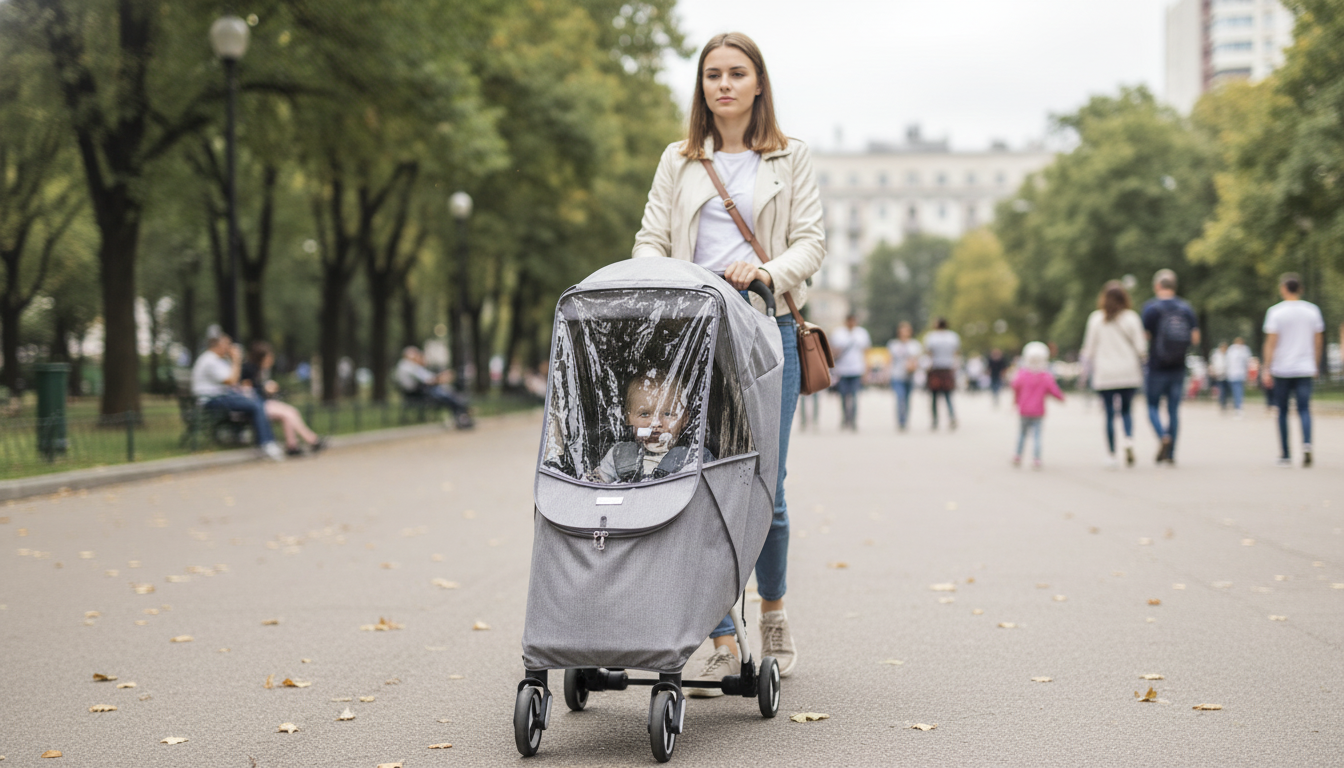
Sudden showers, gusty sidewalks, and dusty paths can turn a simple walk into a scramble. A well-fitted universal rain cover helps keep a child dry and comfortable while preserving airflow and visibility through clear window panels. This guide breaks down what matters most—fit, protection, ventilation, and everyday usability—so outings stay calm in changing weather.
A rain cover works best when it feels “set-and-forget”: it stays taut, keeps water from streaming inside, and still lets you check on your child quickly. If the cover collapses inward in wind or blocks ventilation, it can create a clammy, uncomfortable bubble—especially during longer walks or brisk temperature changes.
Clear windows are more than a “nice extra.” They help caregivers monitor comfort (sleep posture, rosy cheeks, fussiness) without repeatedly lifting a flap in wind or rain. At the same time, ventilation matters just as much as coverage—good airflow reduces condensation, helps keep the temperature steady, and makes short errands safer and more comfortable.
| Stroller type | Most important fit detail | Nice-to-have feature | Common mistake to avoid |
|---|---|---|---|
| Umbrella stroller | Snug fastening around narrow canopy | Extra tie points near handles | Cover flapping into wheels |
| Full-size stroller | Room for extended canopy and recline | Large front window with access flap | Poor ventilation leading to fogging |
| Jogging stroller | Secure attachment that resists wind | Reinforced seams and stable panels | Loose fit that balloons at speed |
| Travel system seat on stroller | Depth and shape that won’t press inward | Easy-open front for quick checks | Over-tightening that distorts the frame |
Before heading out, do a quick “rolling test” indoors: install the cover, turn the front wheels left and right, and push the stroller a few feet. If you hear rubbing, see the plastic pulling toward the tires, or notice straps crossing a brake lever, adjust the fit until everything moves freely.
Cold, wet weather can increase the risk of chill, while a fully enclosed cover can trap warmth and humidity. For broader cold-weather safety guidance, consult the American Academy of Pediatrics and the CDC’s extreme cold recommendations. For general baby product safety reminders, the U.S. Consumer Product Safety Commission is a helpful reference point.
“Universal” fits many common stroller shapes, but not every model. Measure canopy width and front-to-back length, confirm wheel clearance, and make sure straps don’t interfere with brakes, folding latches, or recline mechanisms.
Choose a cover with built-in ventilation (mesh panels or vent holes) and keep airflow paths open. Avoid overdressing under the cover, and wipe interior condensation during stops if humidity builds up.
It can be safe when the cover maintains airflow and stays securely in place without collapsing inward. Check your child regularly for warmth and comfort, and take breaks if the interior starts to feel warm, humid, or stuffy.






Leave a comment